


Lee’s Summit Neighborhoods — Your 2025 Guide to Local Housing Trends and Mortgage Options
Lee’s Summit blends small-town Midwestern character with a wide range of housing choices. This guide explains how neighborhood features and local mortgage programs intersect for buyers in 2025. You’ll see which communities work best for families, commuters, and downsizers; how median prices and appreciation are trending; and which loan programs fit different parts of town. Neighborhood snapshots, clear market metrics, and practical checklists will help prospective buyers weigh schools, amenities, taxes, and HOA costs—while showing how mortgage choice affects monthly affordability and long-term ownership. We organize the content to: highlight top neighborhoods, explain mortgage-program fit, share current market trends and forecasts, provide a repeatable neighborhood checklist, and point to where you can get personalized mortgage help. Throughout, practical language and local insight make it easy to act when touring homes or starting pre-approval.
What Are the Top Neighborhoods to Live in Lee’s Summit in 2025?
Top neighborhoods in Lee’s Summit combine housing variety, school access, walkability, and price momentum. Areas like Raintree Lake, Downtown Lee’s Summit, Lakewood, Arborwalk, and Winterset Park each offer distinct housing styles—from lakefront single-family homes to historic Craftsman cottages—so different buyer profiles gravitate to different pockets. Knowing typical home styles, median price ranges, and main amenities helps you narrow choices quickly. The snapshots below summarize those trade-offs so you can match priorities like schools or commute time with neighborhoods that fit.
Different neighborhoods suit different goals:
- Raintree Lake: Great for buyers who want lake access, trails, and single-family homes.
- Downtown Lee’s Summit: Ideal for walkability, dining, and historic charm if you value urban convenience.
- Arborwalk: A strong pick for families seeking newer construction, parks, and school proximity.
These quick profiles lead into a compact comparison table that highlights median prices, school districts, amenities, and typical home types—helpful for prioritizing which neighborhoods to visit.
Why the neighborhood snapshot table matters: it condenses key attributes so you can compare communities at a glance and pick which areas to tour based on budget and lifestyle.
This snapshot shows how price, schools, and home type cluster by neighborhood and helps you decide where to dig deeper and schedule tours.
Which Neighborhoods Offer the Best Schools and Amenities?

School quality and neighborhood amenities are major demand drivers in Lee’s Summit. Lee’s Summit R-7 serves many central areas and provides consistent school options that support resale value. Neighborhoods near parks, lakes, and downtown amenities often draw more competitive buyers. Parents tend to prioritize walk-to-school options, nearby parks, and extracurricular choices; commuters focus on highway access and drive times. Amenities—community pools, trails, restaurants, and farmers’ markets—shape daily life and often tie to stronger appreciation where public spaces stay active.
- Top school considerations: proximity to elementary schools, middle-school feeder patterns, and access to extracurricular facilities.
- Amenities to watch: lakes and parks for recreation, downtown districts for dining and events, and community centers for family programming.
- Buyer takeaway: neighborhoods with strong schools and amenities usually see steadier demand and better resale prospects.
Next, we’ll look at how property values and appreciation vary across Lee’s Summit neighborhoods.
How Do Property Values and Appreciation Rates Vary Across Lee’s Summit Communities?
Values and appreciation differ by neighborhood based on inventory, amenity investment, and buyer interest. Established areas with low turnover—like Woodland Shores and Lakewood—often show steady appreciation as supply tightens, while newer subdivisions such as Arborwalk can see faster early gains tied to new construction and added amenities. Proximity to downtown, lakes, and highly rated schools tends to correlate with above-average appreciation. Neighborhoods on the edge of town may appreciate more slowly but provide lower entry prices. Compare recent price momentum with days on market to judge negotiating leverage and resale upside.
- Appreciation drivers: school quality, amenity investment, limited supply, and new development.
- Neighborhoods with momentum: pockets near downtown and lakefront areas.
- Buyer tip: balance immediate lifestyle needs with long-term appreciation when choosing a neighborhood.
Those points lead into how mortgage program fit changes neighborhood access for different buyers.
How Do Local Mortgage Options Affect Homebuyers in Lee’s Summit Neighborhoods?
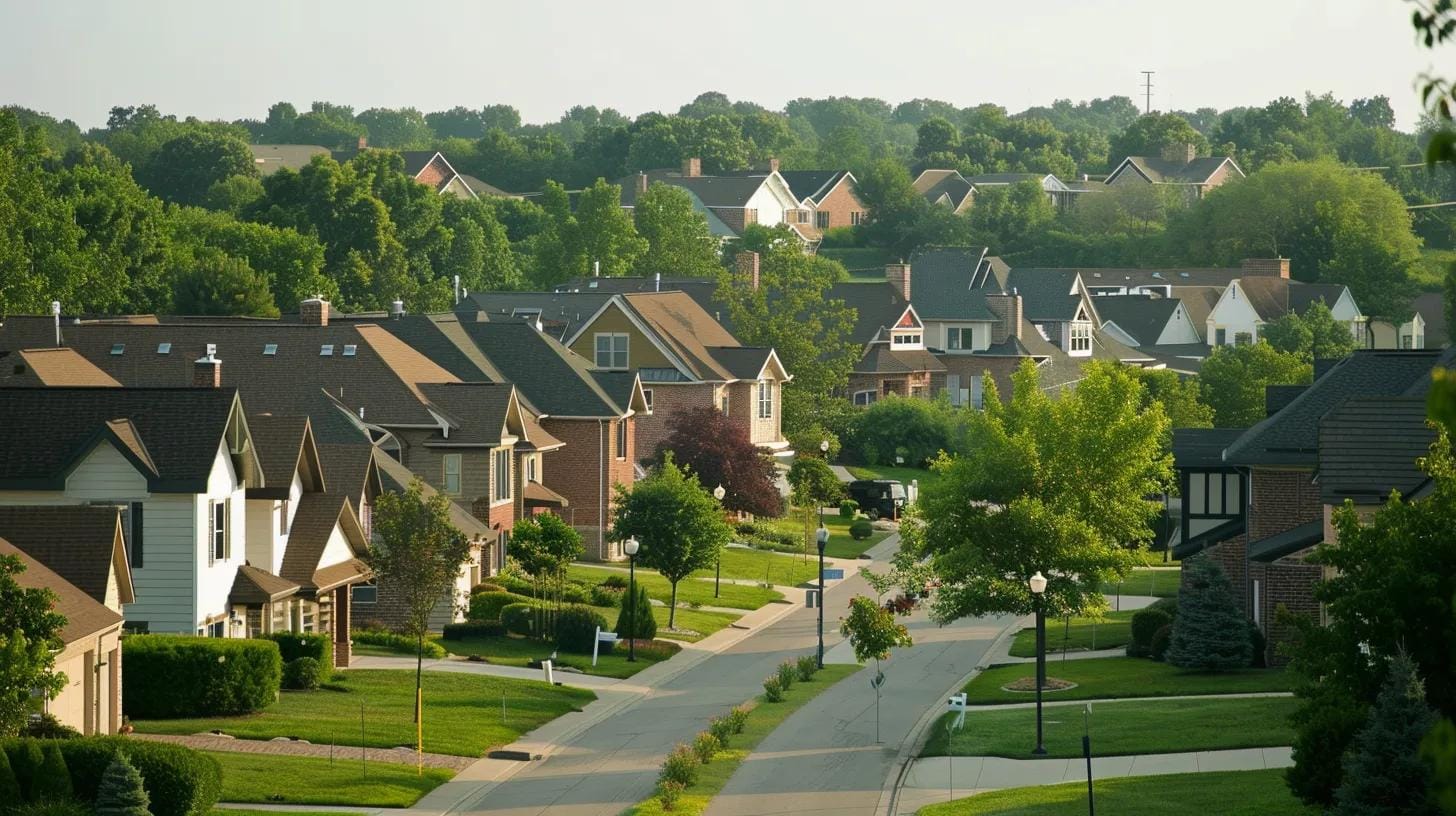
The mortgage you choose affects what you can afford and which neighborhoods are realistic options. FHA loans let buyers use lower down payments—helpful for entry-level neighborhoods or homes needing minor repairs—while VA loans give eligible veterans powerful purchasing options across most neighborhoods. USDA loans can open up outskirts or semi-rural pockets where those programs apply, and conventional loans are often best for higher-priced or renovated properties where lower mortgage insurance is possible with a larger down payment. Knowing program rules ahead of time prevents surprises and helps you make offers that stand up to underwriting.
This table translates loan rules into neighborhood choices and gives you topics to cover with a lender before submitting offers.
What Are the Benefits of FHA, VA, USDA, and Conventional Loans in Specific Neighborhoods?
Each loan program has practical advantages depending on price point and property type. FHA works well for lower-priced neighborhoods and buyers who need a smaller down payment, though FHA appraisals require certain condition standards. VA loans, for eligible veterans, often require no down payment and make move-in-ready neighborhoods more accessible. USDA loans can unlock properties on the metro fringe where eligibility rules permit, and conventional loans benefit buyers pursuing renovated or higher-priced homes who can reduce mortgage insurance with larger down payments.
If you’re weighing FHA, the FHA Homebuyer Education & Learning Program Guide is a helpful resource that walks through budgeting, finding a home, and loan basics.
FHA Homebuyer Education & Mortgage Guide
SUMMARY: This guide presents the FHA Homebuyer Education and Learning Program (HELP) and answers common questions about buying a home. Completing the program can reduce mortgage insurance costs and, in some cases, qualify participants for down payment or closing-cost assistance. The curriculum is divided into five modules (each designed for a roughly 5.5-hour presentation) that cover budgeting for a down payment and post-purchase expenses, how to find and negotiate on a home, selecting a lender, mortgage types, and the loan process including appraisals and underwriting. Each module includes practical exercises and an evaluation component.
- Actionable guidance: pick a neighborhood and property type first, then choose the loan that minimizes out-of-pocket costs while meeting your long-term goals.
- Example: a buyer targeting a renovated downtown home may prefer conventional financing, while a first-time buyer in an older Lakewood house might consider FHA.
- Next step: get pre-qualified to narrow which programs are realistic before you write offers.
Next: how property taxes and HOA fees change monthly costs and loan qualification across neighborhoods.
How Do Property Taxes and HOA Fees Impact Mortgage Affordability in Lee’s Summit?
Property taxes and HOA dues add to your monthly housing costs, affect debt-to-income ratios, and can change which neighborhoods are affordable. Local tax rates and common HOA fee ranges mean monthly payments can differ significantly between two homes with the same mortgage principal. Lenders include taxes and HOA dues when calculating qualifying ratios, so a neighborhood with low HOA fees but higher taxes might still be more affordable than a gated community with steep dues that cover many amenities. Run precise calculations during pre-approval and request HOA documents and tax history early to avoid surprises.
- Budgeting step: add annual property taxes and monthly HOA fees to your principal-and-interest estimate when checking affordability.
- Underwriting impact: higher taxes or dues raise required income to qualify for the same loan amount.
- Buyer advice: ask for HOA rules, reserve-study info, and tax history early in escrow to confirm ongoing costs and any special assessments.
With recurring costs accounted for, the next section reviews the latest market trends and forecasts for Lee’s Summit neighborhoods.
What Are the Latest Housing Market Trends and Forecasts for Lee’s Summit Neighborhoods?
Market trends for Lee’s Summit in 2025 show shifts in median prices, inventory, and days on market—metrics that help you judge urgency and negotiation strategy. Median prices across featured neighborhoods moved year-over-year because of limited supply in popular areas and steady local demand. Days on market vary by neighborhood and price tier, which affects whether you should expect bidding or room to negotiate. Focus on these key metrics—median home price, appreciation rate, days on market, and inventory—to interpret short-term windows versus long-term stability. The table below summarizes recent values and year-over-year changes.
These metrics show moderate price growth, shorter selling windows, and tightening inventory—signals that desirable neighborhoods continue to see steady demand. Be prepared with financing and clear priorities when making offers.
How Have Median Home Prices and Days on Market Changed in 2025?
Median price and days-on-market are leading indicators of demand and negotiating power. In 2025 we’ve seen modest price gains and quicker sales in sought-after pockets. A rising median price usually reflects increased buyer interest or constrained supply; shorter days on market mean homes priced correctly will move fast. For buyers, being pre-approved and ready to act matters; for sellers, these trends support confident pricing without overreaching. Use recent sales and days-on-market as context when crafting offer strategy.
- For buyers: prepared buyers with pre-approval and clear priorities win in faster markets.
- For sellers: demand supports assertive listing strategies, especially in school- and amenity-rich areas.
- Negotiation tip: compare days-on-market and recent sale prices to fine-tune your offer terms.
Next we highlight which neighborhoods are showing the strongest appreciation and why.
Which Neighborhoods Are Experiencing the Highest Appreciation Rates?
Neighborhoods close to high-demand amenities—like Downtown Lee’s Summit and lakefront areas around Raintree Lake—are among the top appreciators because of steady buyer interest and limited waterfront supply. Newer planned communities can show higher appreciation early as infrastructure and amenities arrive, while long-established neighborhoods tend to appreciate steadily because resale supply is limited. Key appreciation drivers include school reputation, walkability, recreational access, and nearby retail or transit improvements. Watch for risks—overbuilding, local employment shifts, or tax policy changes—that could temper growth. Balance short-term momentum with long-term fundamentals when picking a neighborhood for living or investing.
- Top drivers: strong schools, limited inventory, and concentrated amenities.
- Risk checks: be mindful of sudden inventory increases or policy changes that could slow growth.
- Strategy: choose neighborhoods that match lifestyle needs and offer reasonable resale prospects.
With market context covered, the next section gives a practical community-guide framework you can use to choose the right Lee’s Summit neighborhood.
How Can Homebuyers Use Community Guides to Choose the Right Lee’s Summit Neighborhood?
A community guide turns priorities—schools, commute, price, amenities—into a repeatable process that narrows choices and clarifies trade-offs. The best guides combine neighborhood snapshots, mortgage-affordability checks, and on-the-ground visits to confirm intangibles like street feel and noise. Use checklists and tools—mortgage calculators, pre-approval estimates—to turn lifestyle preferences into clear budget limits so neighborhoods under consideration match both emotional and financial goals.
- Define priorities: list your top three attributes (for example: schools, commute time, lot size).
- Compare snapshots: use neighborhood tables to match your priorities with median prices and amenities.
- Run affordability checks: plug numbers into mortgage calculators and get pre-approval estimates.
- Visit neighborhoods: tour at different times of day to gauge traffic, noise, and activity.
- Review recurring costs: request HOA documents and verify property tax history before making offers.
This checklist turns preferences into practical steps and leads naturally to evaluating amenities and school-district impacts that shape final decisions.
What Amenities and Lifestyle Features Define Each Neighborhood?
A neighborhood’s daily experience comes down to amenities—parks, dining, walkability, lake access, and community events—and those features shape both satisfaction and resale value. Family-oriented areas emphasize playgrounds, trails, and community pools; commuter-friendly pockets prioritize highway access and shorter drives. Active-adult or higher-end neighborhoods highlight walkable dining, low-maintenance yards, and walking paths, while downtown-adjacent areas focus on being close to shops and cultural events. Match amenity clusters with your routines and long-term preferences to pick a neighborhood that fits how you live, not just where you sleep.
- Amenity categories: parks and trails, dining and retail, waterfront access, community centers.
- Mapping amenities: families often prioritize parks and schools; commuters focus on drive time; active adults value walkability.
- Value impact: neighborhoods with concentrated amenities usually hold stronger long-term demand and appreciation.
Understanding amenities leads into how school districts influence neighborhood selection and pricing.
How Do School Districts Influence Neighborhood Selection?
School districts strongly affect neighborhood demand and appraisal values. Buyers who prioritize schools concentrate around preferred districts, pushing competition and prices higher in those areas. Lee’s Summit R-7 covers many neighborhoods and its reputation and feeder patterns make nearby communities especially desirable for families. School ratings and program offerings can affect appraisals, buyer competition, and long-term resale—so confirm attendance boundaries, program availability, and proximity to schools. For many buyers, the school district is the deciding factor between otherwise similar neighborhoods.
- Practical steps: verify current attendance zones and visit schools during open events or open houses.
- Appraisal effect: sought-after districts can lift comparable-sales metrics used by appraisers.
- Buyer guidance: balance school priorities with commute and price to ensure a sustainable choice.
After using the guide to narrow neighborhoods, the last section shows where to get personalized mortgage assistance tailored to Lee’s Summit communities.
Where Can You Find Personalized Mortgage Assistance for Lee’s Summit Neighborhoods?
Local mortgage guidance links neighborhood selection to program eligibility and real-world affordability. Local lenders and mortgage advisors translate neighborhood snapshots and market data into loan scenarios and pre-approval packages, pointing buyers toward suitable programs—Conventional, FHA, VA, USDA, Jumbo, or Renovation Mortgages. Getting help early clarifies down payment needs, qualifying income thresholds, and property-specific underwriting items so you can make stronger, faster offers in competitive areas.
Molly Dean Mortgages provides neighborhood-focused mortgage guidance for Lee’s Summit buyers. With mortgage banking experience since 2003, Molly Dean Mortgages blends local market knowledge, personalized service, and client education. Services include pre-approval coaching, program matching (Conventional, FHA, VA, USDA, Jumbo, Renovation), and help budgeting for taxes and HOA fees—so buyers can translate neighborhood priorities into realistic financing and competitive offers.
How Does Molly Dean Mortgages Support Homebuyers in Specific Communities?
We support Lee’s Summit buyers with a straightforward process that pairs neighborhood insight with loan expertise to speed pre-approval and closing. Our team helps with pre-approval, matches borrowers to suitable programs (for example, FHA for entry-level buyers or VA for qualified veterans), and advises on renovation financing for homes that need work. Our local-market perspective sets realistic price expectations and explains how taxes, HOA dues, and property condition affect loan eligibility. Ask for neighborhood-specific mortgage guidance to align financing with your timeline and target communities.
- Pre-approval help: quick pre-approval to boost offer confidence.
- Program matching: guidance across Conventional, FHA, VA, USDA, Jumbo, and Renovation loans.
- Local advice: neighborhood-level insights to support negotiation and appraisal expectations.
Local, program-focused support helps you move from community selection to a financed purchase with less friction and more clarity.
Frequently Asked Questions
What factors should I consider when choosing a neighborhood in Lee’s Summit?
Think about school quality, proximity to amenities, commute time, and housing budget. Look at the types of homes available, neighborhood vibe, and safety. Also check future development plans that could affect values. A clear view of these elements helps you find a neighborhood that fits your lifestyle and long-term goals.
How can I assess the long-term value of a neighborhood?
Review historical appreciation, current market trends, and local school quality. Favor neighborhoods with limited inventory and steady demand. Consider amenities, community engagement, and planned projects that could boost desirability. Local real estate pros can add useful perspective on likely long-term trends.
What are the common challenges first-time homebuyers face in Lee’s Summit?
First-time buyers often wrestle with the mortgage process, local market competition, and budget constraints. Finding a home that fits needs and price in a competitive area can be tough. New buyers should pay attention to inspections, HOA rules, and ongoing costs. Local agents and lenders can help navigate these hurdles.
How do local economic factors influence the housing market in Lee’s Summit?
Local job growth, incomes, and population shifts shape housing demand and prices. A strong job market attracts buyers and raises prices; economic slowdowns can reduce demand and slow appreciation. Keep an eye on employment trends and business development for clues about future market direction.
What role do community events play in neighborhood desirability?
Community events—farmers’ markets, festivals, outdoor concerts—build local connections and make neighborhoods more appealing. Regular events help create a sense of place, attract families and active buyers, and can enhance property values by making the area more desirable.
How can I effectively budget for homeownership in Lee’s Summit?
Start by totaling monthly housing costs: mortgage, taxes, HOA fees, insurance, and maintenance. Use a mortgage calculator to model different loan scenarios and set aside funds for unexpected repairs. A detailed budget that includes both fixed and variable costs will help you manage homeownership comfortably.
What should I know about the impact of property taxes on home affordability?
Property taxes add to your monthly housing cost and affect your debt-to-income ratio. Tax rates vary by neighborhood and can limit the loan amount you qualify for. Research tax rates in target neighborhoods and include them in your budget to avoid surprises at closing.
Conclusion
Knowing Lee’s Summit neighborhoods helps you make choices that match both lifestyle and financial goals. By weighing schools, amenities, and mortgage options, you can find the community that fits your needs. Working with local mortgage experts can simplify the process and align financing with neighborhood realities. Ready to take the next step? Explore our resources and connect with a mortgage advisor to find the right loan for your ideal home.


